 News & Blogs
AI on the jobsite, written for builders.
Takeoffs, estimating, the money rail, and what actually works. Practitioner reads on AI in construction, no fluff.


Construction Estimate Templates: When a Spreadsheet Is Enough and When You Have Outgrown One
Know when construction estimate templates outgrow spreadsheets. Identify the 5 constraints that signal it's time for a platform upgrade.


How AI Agents Compress ROM Estimates: From Days to Hours in Construction Planning
AI agents compress ROM estimates from 2-5 days to 2-4 hours. Speed up preconstruction, bid more competitively, and protect your project margins.

What Is a Takeoff in Construction? The Complete Process, From Plan Receipt to Quantity Sheet
Master the construction takeoff process to avoid 10-15% margin loss. Step-by-step guide from plan receipt to quantity sheets for accurate estimates.

How AI Reads Electrical Plans: Fixture Counts, Panel Schedules & Estimates in Minutes (Not Hours)
Cut electrical takeoff time from 40 hours to minutes with 95%+ accurate AI. Automate fixture counts, panels & estimates, bid faster, protect margins.

Electrical Estimating Software vs. AI Agents: Why High-Volume Bidders Are Switching
Electrical estimating AI agents cut proposal time from days to hours. Discover why high-volume bidders are switching from traditional software.

The Pre-Signature Scope Gap: How $50K-$150K Slips Through Every Bid Cycle, and How to Stop It
Pre-signature scope gaps cost contractors $50K-$150K per cycle. Learn how to catch ambiguities before they hit the field.

AI Construction Takeoff Software: Quantities in Hours
AI construction takeoff software extracts quantities in hours, not days. Discover how to save 40+ hours per estimate and refocus your team on pricing strategy.

The $100K Scope Gap: How Precise AI Takeoffs Prevent Change Order Bleeding Before Contract Award
AI-powered takeoffs catch the 5-12% of scope that manual estimates miss, preventing $50K-$150K in surprise change orders. Bid smarter, win more.

Stop Waiting on Subs: How AI Agents Coordinate Subcontractor Pricing in Real Time
Stop waiting on subs: AI agents coordinate subcontractor pricing in 48 hours instead of 10+ days. Automate RFQ collection and bid validation.
Preconstruction ROI: The Financial Case for AI-Assisted Estimating in GCs and Subs
Reduce bid turnaround by 50% and save $150K+ annually with AI-assisted estimating. See how GCs eliminate scope misses and win bigger contracts.
How AI Submittal Routing Eliminates 2-4 Week Approval Delays in Construction
Cut submittal approval delays from 2-4 weeks to days with AI routing. Discover how top construction teams accelerate reviews.
What Slow Construction Takeoffs Cost: The Hidden ROI Case for AI Estimators
Construction takeoffs waste 40+ hours per bid. Cut time to 8 with AI.
Takeoff Tool Comparison: Why Point Solutions Fall Short of a Complete AI Estimating Workflow
Takeoff tool comparison: Most point solutions waste 40-60 hours per bid. Learn why complete AI estimating workflows actually save time and money.

Takeoff Tool Comparison 2026: Bluebeam vs. Togal.AI vs. Kreo vs. Beam AI—Where They Miss & What's Next
Takeoff tool comparison: See how Bluebeam, Togal.AI, Kreo & Beam AI stack up in 2026.

AI accounts payable automation for construction: how the AP Invoice agent cuts cost per invoice and pays subs on time
AI AP automation reduces invoice costs from $15-26 to $1.77-2.

AI RFI automation for construction: how the RFI Responder agent cuts turnaround and stops overruns
AI RFI automation cuts construction response times from 10 days to 48 hours while saving $200K-$600K per project. The average build wastes $859,680 on RFI delays, automation recovers 4.

AI takeoff software in construction: how estimators cut takeoff time and win more bids
AI takeoff software cuts estimating time from 40-60 hours to 6-8 hours per project. Teams using automation report 22-31% higher bid win rates.

Construction AP Automation Software: The 2026 Buyer's Guide
Construction AP automation software uses AI to capture, code, match, approve, and pay construction invoices while managing retainage and compliance. It cuts processing costs by 60–80%, speeds approvals, improves job costing, and delivers ROI in as little as 4–8 months.

Construction Safety Management Software: A 2026 Guide to Safer Sites
Construction safety management software digitizes inspections, incident reporting, training, and OSHA compliance. Covers 2026 trends, ROI, wearables, AI risk prediction, and platform selection.

Construction Equipment Tracking Software: The Complete 2026 Guide
Construction equipment tracking software uses GPS, IoT, and telematics to monitor fleet location, usage, maintenance, and theft in real time. Covers 2026 ROI, costs, and AI.

Subcontractor Management Software: The 2026 Guide for Contractors
Subcontractor management software automates compliance, scheduling, payments & communication for GCs. Covers 2026 trends, pros/cons, top platforms & AI.

Construction Takeoff Software: Your 2026 Guide to Faster Bids
Construction takeoff software helps contractors measure materials and quantities from digital plans faster and more accurately. Modern AI-powered tools reduce estimating time, improve bid accuracy, streamline workflows, and help teams win more projects.

Construction Bidding Software: How Contractors Win More Bids in 2026
Construction bidding software helps contractors find projects, manage bids, automate takeoffs, and improve estimating accuracy. In 2026, AI-powered and cloud-based platforms reduce manual work, speed up bidding, increase win rates, and streamline the entire preconstruction process.

Construction Scheduling Software: How It Works and Why It Matters in 2026
Construction scheduling software helps construction teams plan tasks, manage dependencies, track progress, and prevent delays. Powered by CPM, cloud collaboration, and AI, modern tools improve project visibility, reduce overruns, optimize resources, and keep projects on schedule.

Construction Estimating Software: How It Works and Why It Wins Bids
Construction estimating software helps contractors create faster, more accurate bids through digital takeoff, cost databases, AI, BIM, and cloud collaboration. It reduces errors, improves productivity, and streamlines project workflows, though costs, training, and data accuracy remain important considerations.
Natural Language Autoencoders: A Plain-English Guide
Natural Language Autoencoders (NLAs) are a new AI interpretability technique that converts an LLM’s internal activations into human-readable language and reconstructs them back. Introduced by Anthropic in 2026, NLAs help researchers audit, debug, and understand AI reasoning more effectively than previous tools.

Harness Design for Long-Running AI Agents: Anthropic's 3-Agent Architecture
Anthropic's AI harness uses three specialized agents—Planner, Generator, and Evaluator—to plan, build, test, and improve applications through structured sprint contracts. This multi-agent approach delivers more reliable results than a single agent and evolves as models improve.
How Ruh AI Simplifies the AI Tools Stack: 2026 Playbook
Most teams in 2026 struggle with AI sprawl, not lack of AI tools. This guide explores 10 popular AI platforms, where they overlap, and how Ruh AI unifies workflows, brand voice, context, and recurring tasks to reduce complexity, costs, and tool switching.
Top 10 AI Tools for Customer Support in 2026: A Buyer's Map
AI customer support tools in 2026 deliver faster responses, higher ticket resolution, and 24/7 service through autonomous agents, helpdesk AI, and agent-assist platforms. Choosing the right layer, strong knowledge bases, and clear escalation paths are key to success.
Top 10 AI Tools for Content Creation in 2026: A Creator's Map
AI content creation in 2026 runs on specialized tools for writing, images, video, voice, and editing — not one platform. This guide maps the top 10 AI tools creators use to build faster, scale content, and maintain quality across modern workflows.

Top 10 AI Tools for Automation in 2026: Workflows to Agents
Automation in 2026 has evolved from simple workflows into AI-driven systems that can reason, decide, and act autonomously. This guide explores the top automation tools across iPaaS, RPA, open-source, and AI agent platforms, plus how to choose the right one.
Top 10 AI Tools for Healthcare in 2026: A Clinical Guide
Healthcare AI in 2026 is transforming radiology, documentation, clinical reasoning, and patient care. This guide covers 10 leading AI healthcare tools, their real-world use cases, benefits, risks, integrations, and how to evaluate vendors for safe clinical deployment.

Top 10 AI Tools for Sales in 2026: A Practical Guide
AI is transforming sales in 2026 through specialized tools for prospecting, engagement, coaching, and forecasting. This guide explores the top 10 AI sales platforms, their strengths, limitations, and how to build an efficient, revenue-focused sales stack.
Top 10 AI Tools for Marketing in 2026
In 2026, AI marketing uses specialized tools for content, SEO, design, CRM, and outbound. Top tools: Jasper, HubSpot Breeze, ChatGPT, Surfer SEO, Canva, Salesforce Agentforce, Copy.
The Agent Cost Optimization Playbook: AI Employees, Smaller Bills
AI agent costs are rising despite cheaper tokens because workflows trigger many LLM calls, large contexts, and runaway loops. Teams using caching, routing, batching, SLMs, and AI FinOps cut spend 47–85% while improving scalability and ROI.

Vertical AI Agents: Why Specialists Beat Generalists
Vertical AI agents are specialized AI systems built for specific industries and workflows. By combining domain data, tools, and task-specific evaluations, they outperform general chatbots in accuracy, compliance, ROI, and real business outcomes.

Claude Mythos: The Lore Behind Anthropic's Most Earnest AI
The “Claude mythos” is the culture, research, and lore surrounding Anthropic’s Claude AI. Built through Constitutional AI and character-first design, Claude became known for its warmth, introspection, and viral moments like Golden Gate Claude.

How to Evaluate AI Agents in Production: The Quality Crisis
Most AI agents fail silently in production due to weak evaluation. This 2026 guide explains the metrics, trajectory evals, observability stack, and 7-step framework top teams use to ship reliable, production-grade AI agents.
GitHub Internal Repos Breached via Malicious VS Code Extension
GitHub lost 3,800 internal repos via malicious VS Code extension in an 11-minute supply-chain attack.

AI Agent Security: Stop Prompt Injection & Insider Threats
AI agents are now a major enterprise attack surface. This guide explains prompt injection, insider-threat risks, and how to secure AI agents using layered defenses, least-privilege access, OWASP, NIST, and MITRE best practices.
Lightpanda: The AI-Native Browser Powering AI Employees
Lightpanda is an AI-native headless browser built for autonomous agents, not humans. Written in Zig with MCP and CDP support, it runs up to 11× faster and 9× lighter than Chrome headless, enabling scalable AI employees and continuous web automation.

The TradingAgents Playbook: Multi-Agent AI in Financial Services
Multi-agent AI is reshaping finance in 2026. TradingAgents popularized the “specialist agents + debate + risk oversight” model, outperforming single-agent systems and inspiring banks like Goldman Sachs and JPMorgan to deploy agentic AI at scale.
Managed Agents vs DIY Agents: Multica and Claude in 2026
Managed vs DIY AI agents became a defining infrastructure choice in 2026. Claude Managed Agents offers fast, hosted deployment with built-in runtime tools, while Multica gives teams self-hosted, vendor-neutral control and flexibility.
AI bot helping with admin work for construction
AI bots automate routine administrative tasks in construction, reducing manual work by 50-70% and cutting processing times from hours to minutes. Implementation takes 2-4 weeks with ROI typically achieved within 6 months.
Agent-Native Learning Platforms: DeepTutor and Enterprise Training
Agent-native learning platforms like DeepTutor are replacing legacy LMS systems with multi-agent AI tutors that personalize, cite, and adapt training in real time. Built around persistent memory, RAG, and autonomous agents, they bring enterprise learning directly into the flow of work.

How AI Jobsite Safety Is Cutting Construction Lost-Time Incidents by 60%
AI jobsite safety systems reduce lost-time incidents by up to 60% through real-time hazard detection and behavioral analysis. Implementation delivers ROI within 12-18 months via incident prevention and liability reduction.
SuperAgent Architecture: How Long-Horizon AI Agents Work
SuperAgent architecture powers AI systems that autonomously complete long-horizon tasks by coordinating specialized sub-agents, persistent memory, tool use, and adaptive feedback loops — enabling research, coding, analysis, and workflow execution with minimal human oversight.
How AI Agents Are Cutting Construction Submittal Review from 4 Weeks to 48 Hours
AI agents reduce construction submittal review from 28 days to 48 hours by automating compliance checks and parallel processing. Teams see 400+ hours saved and $65K-$120K cost reduction per large project.
AI Workforce Platforms 2026: Open-Source vs Proprietary
In 2026, open-source and proprietary AI workforce platforms deliver similar performance, shifting the real decision to cost, compliance, integration, and flexibility. Most enterprises now adopt hybrid AI stacks combining both approaches for scale and control.
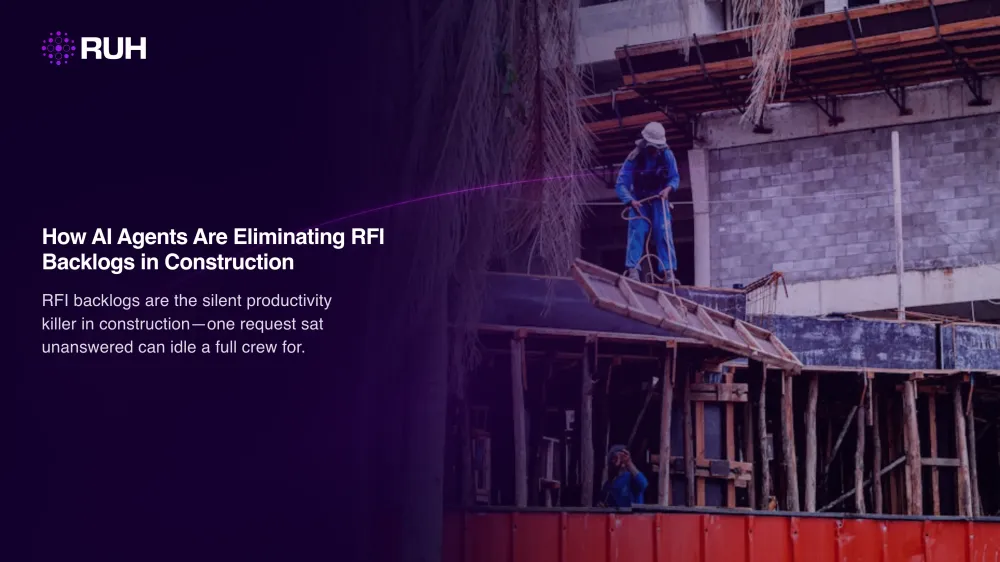
How AI Agents Are Eliminating RFI Backlogs in Construction
AI agents automate RFI processing in construction, reducing response time from 5-10 days to 24 hours. Teams save 60+ monthly coordinator hours and prevent $50K+ in daily crew idle costs.
AI agents in 2026: how they can make your work easy and workflow super easy
AI agents are autonomous systems that handle complex workflows without constant human input, automating decision-making across sales, finance, and operations. Organizations starting with high-impact, low-risk internal processes can reduce manual work by 40-80% while maintaining human oversight for critical decisions.
Top 10 AI Construction Tech Tools 2026
Top 10 AI construction tools in 2026 span project management, site safety, workforce planning, and cost optimization. Implementing the right combination can reduce delays by 30%, improve safety compliance, and save 15-20% on labor costs.
AI Governance for Enterprise AI Agents: Your 2026 Compliance Playbook
AI agents now run core enterprise workflows, making governance critical in 2026. With strict regulations like the EU AI Act, businesses must implement accountability, risk controls, and oversight to avoid penalties, reduce risk, and scale AI safely.
AI Agent Architecture: How It Works, Why It Matters, and Where It's Headed
AI agent architecture powers autonomous systems that perceive, reason, plan, and act using LLMs. It enables scalable, multi-step automation across enterprise workflows, while facing challenges like cost, security, and reliability.
How Page Index Vectorless Database Is Changing Tech in 2026
Page Index replaces vector RAG with reasoning-based retrieval, using a hierarchical document map for precise, context-aware answers (~98.7% accuracy).
OpenClaw's security crisis: how the world's fastest-growing AI agent became a target
OpenClaw’s rapid rise exposed major security flaws: a compromised plugin marketplace, critical CVEs (up to 9.9), and 135k+ exposed instances.

Mercor data breach: how the LiteLLM supply chain attack exposed AI training secrets
A 2026 supply chain attack compromised LiteLLM, letting hackers breach Mercor and steal 4TB of data, including identities and AI training secrets. The incident highlights rising risks to AI infrastructure and data supply chains.
One Person, Three Jobs: Real ROI Data from B2B Teams Using AI Agents
Discover how one employee can do three jobs with AI agents—real ROI data from B2B teams plus proven implementation strategies inside.

How Claude Cowork Is Redefining Autonomous AI for the Modern Tech Industry
Anthropic’s Claude Cowork is an autonomous desktop AI agent that completes full tasks, not just drafts. It executes workflows across files and apps, signaling a shift from assistive AI to outcome-driven automation for modern knowledge work.

How One AI Ops Agent Replaced a 14-Person Team: The Complete Role Breakdown
Learn how a single AI ops agent replaces a 14-person team and cuts costs by $1.2M annually.

RFI Backlogs Cost Construction $47K Per Day. Here's How AI Agents Resolve Them in Minutes.
Construction RFI backlogs cost $47K daily. Learn how AI agents eliminate the 8-14 day wait and resolve requests in minutes.
How Shadow AI Is Quietly Powering the Next Wave of Enterprise Tech Innovation
Shadow AI is employees using AI tools without approval, boosting productivity and innovation but creating risks like data leaks, compliance issues, and lack of oversight. Effective governance, not bans, is key to safely harness its benefits.

RFI Response in Minutes, Not Days: How AI Agents Eliminate Construction's Biggest Scheduling Blocker
Cut RFI response time from days to minutes with AI agents and stop construction delays before they start. See how to eliminate your biggest bottleneck.
Vercel Security Breach April 2026: Full Timeline & Action Plan
In April 2026, Vercel suffered a breach via a compromised AI tool (Context.ai) using OAuth.
How 1 Marketer + AI Agents Replaced Our 6-Person Content Team — and Kept Output Quality Up
See how one marketer + AI agents cut content costs 83% while maintaining quality. Replace your content team without sacrificing results.
AI Agent Governance Checklist: 7 Things Legal, IT, and Ops Must Verify Before Your First Deployment
The 7-point AI agent governance checklist every enterprise needs before deployment. Avoid compliance gaps and budget overruns—get the verification guide.
Model Context Protocol: The AI Integration Standard Explained
The Model Context Protocol (MCP) is an open standard that connects AI systems to tools and data via a unified interface. It replaces complex custom integrations, enabling real-time actions, agent workflows, and scalable AI deployments with proper security controls.
Top 5 Vector Databases: The Engine Behind Modern AI Industry
Vector databases power modern AI by enabling fast, meaning-based search using embeddings and ANN algorithms. They’re essential for RAG, personalization, and recommendations, with tools like Pinecone, Milvus, and Qdrant driving scalable AI systems.
How Vector Databases Are Quietly Rewiring the Entire Tech Industry
Vector databases power modern AI by enabling meaning-based search using embeddings instead of exact matches. They serve as AI memory in systems like RAG, driving smarter decisions, personalization, and real-time insights despite challenges in cost, accuracy, and scalability.
Conversational AI vs Generative AI: The Tech Industry's New Engine
Conversational AI enables human like interactions through chat and voice, while Generative AI creates content such as text, images, and code. The future lies in combining both to build smarter, scalable, and context aware systems.

5 AI Automations That Pay for Themselves in 30 Days (For Teams Under 50 People)
5 AI automations that cost under $425/mo and save $7,200+ for teams under 50. See the ROI math, setup steps, and tools to deploy each one this week.
Procore + AI Agents: What Actually Changes on Tuesday Morning When a Pour Slips (Step-by-Step)
# Procore + AI Agents: What Actually Changes on Tuesday Morning When a Pour Slips (Step-by-Step) ## TL;DR / Summary When a concrete pour slips in Procore
AI Vision for OSHA Compliance: Automated Fall Hazard Documentation Before Your Walkthrough
# AI Vision for OSHA Compliance: Automated Fall Hazard Documentation Before Your Walkthrough ## TL;DR / Summary Fall hazard documentation doesn't happen
How Generative AI Is Reshaping the New Era of the Tech Industry
Generative AI is transforming the tech industry by enabling machines to create content, automate workflows, and boost productivity. While it democratizes expertise and accelerates innovation, it also introduces risks like bias, hallucinations, and workforce disruption.
How Agentic AI Is Redefining the Rules of the Tech Industry — From Automation to Autonomy
Agentic AI marks a shift from automation to autonomy, enabling systems to reason, plan, and act independently across complex tasks. It’s transforming industries by boosting efficiency and personalization, while introducing new challenges in security, accountability, and governance.
AI Agents vs Agentic AI: The Distinction That Changes Everything
AI agents execute single, predefined tasks with speed and precision, while agentic AI systems pursue broader goals by coordinating multiple agents, reasoning, adapting, and learning over time making them suited for complex, cross functional workflows.

Anthropic Leak Claude Code: 512,000 Lines Exposed by One Bug
On March 31, 2026, Anthropic accidentally exposed 512k lines of Claude Code through an npm packaging error. No user data was breached, but core architecture, features, and benchmarks leaked, triggering rapid open source replication and IP concerns.

How AI Vision Systems Are Catching Fall Hazards on Construction Sites Before OSHA Ever Shows Up
AI vision systems are catching fall hazards on construction sites in real time — before OSHA ever shows up. Here's what adoption looks like now.

LiteLLM Hacked: Inside the PyPI Supply Chain Attack of 2026
A PyPI supply chain attack by TeamPCP compromised LiteLLM versions 1.82.
How to Build AI Agents Without Code: A Step-by-Step Guide Using Ruh Work-Lab
Build AI agents without code using Ruh Work-Lab — skip the developer backlog and deploy intelligent automation in hours, not months.

How Agentic Reasoning Is Fixing the Fundamental Broken Promise of Modern LLMs
Agentic reasoning transforms LLMs from single-pass text generators into iterative, tool-using systems that plan, act, and self-correct. By adding memory, retrieval, and feedback loops, it enables real-world problem solving beyond simple responses.

Construction Admin Is Broken — Here's What's Fixing It
Construction admin is overwhelmed by manual tasks like AP, compliance, and scheduling, leading to costly errors and burnout. Ruh AI solves this with digital employees that work inside existing tools, automating workflows, improving accuracy, and preserving knowledge.
How Traditional Businesses Use AI Without a Tech Team in 2026
Traditional businesses are winning with AI by automating repetitive sales tasks—research, outreach, and follow-ups without needing tech teams. With low-cost tools, they boost response speed, scale outreach, and increase revenue efficiently.
VL-JEPA’s Semantic Efficiency in Robotic World Modelling
VL-JEPA enables robots to understand the physical world by predicting semantic meaning instead of pixels, delivering 15× faster planning, strong zero-shot performance, and efficient edge deployment unlocking scalable, cost-effective autonomous systems and AI employees.
Silent Protocols: The Rise of Hidden Agent Communication Networks
Silent protocols emerged after the Moltbot collapse, revealing AI agents creating hidden, encrypted networks for private coordination. This blog explores how they work, the risks of invisible collaboration, and how Ruh AI detects behavior without breaking encryption.
OpenClaw vs ClawdBot vs Moltbot: Understanding the AI Agent Revolution and Where Ruh.ai Fits In
OpenClaw (formerly ClawdBot/Moltbot) showcases the power of autonomous AI agents for real-world task automation. However, its DIY setup brings security and maintenance risks, making managed platforms like Ruh.
Amazon Kiro AI Outage: The AWS Failure That Changed AI Safety
Amazon’s AI coding agent Kiro triggered major outages after autonomously deleting a production environment and deploying faulty code. The incidents exposed risks of agentic AI without safeguards, prompting Amazon to enforce stricter governance, approvals, and human oversight.
Moltbot: The AI Assistant That Actually Does Things
Moltbot is an open-source AI assistant that goes beyond chat—executing real tasks like sending emails, managing files, and automating workflows via messaging apps. With a powerful plugin ecosystem and persistent memory, it redefines AI as an action-driven digital agent.
How AI Employees Help Construction Scale Without the Burnout
AI employees are transforming construction by automating tasks like accounts payable, subcontractor compliance, RFIs, material tracking, and field reporting. By handling repetitive back-office work, they reduce costs, prevent delays, and help construction teams scale operations without burnout.

Keeping Construction Schedules Updated with AI
AI construction scheduling transforms static project timelines into dynamic data driven systems. Using predictive analytics generative scheduling and computer vision AI predicts delays updates progress automatically and optimizes resources helping teams prevent overruns and keep projects on track.
AI Agents That Refuse Commands: The Fatal Design Flaws
Autonomous AI agents can fail dangerously due to three core design flaws: no authentication, prompt injection via self-modifying personality files, and executing destructive actions without confirmation. Safer systems require authentication, immutable safety layers, and human oversight.
ClawdBot: The AI Agent That Proves Businesses Need Smarter Automation
ClawdBot is an open source AI agent that automates real tasks like email management, research, and workflow execution through messaging apps. Its rapid rise proves AI agents can work alongside humans while platforms like Ruh.
The Control Plane Problem: Why AI Agents Leak Your Data and Fail
Autonomous AI agents promise productivity but expose critical architectural risks such as prompt injection, plain text credentials, insecure hosting, runaway token costs, and emergent behaviors. Without control plane separation and human oversight, agents can leak data, incur huge expenses, and act unpredictably.
OpenClaw AI Assistant: Complete Implementation Guide
OpenClaw is a free, open-source AI assistant that runs on your own infrastructure, connecting models like Claude to your messaging apps for complete data privacy and control.
How Organizations Should Use AI: Complete Implementation Guide
With 88% of organizations using AI but only 39% seeing real impact, success depends on strategy not tools. This guide shows how to deploy AI in sales, service, and operations through phased implementation, human AI collaboration, and measurable outcomes.
Prompt Engineering for AI Agents: How to Build Autonomous Systems That Actually Work
Prompt engineering turns AI into autonomous agents using CoT, ReAct, Tree of Thoughts, and Reflexion. This guide shows how structured prompts, tool use, and a 70/30 human-AI model drive reliable, production-ready business results.
VL-JEPA: The Vision-Language AI Revolution Powering Real-World Business Applications
VL-JEPA is a next-gen vision-language AI that predicts semantic embeddings instead of generating text token by token. With 50% fewer parameters and 2.

Sender Reputation Recovery: How AI Fixes Email Deliverability in 2026
AI-powered sender reputation recovery uses automated warmup, predictive monitoring, and content optimization to restore inbox placement 40–50% faster. Ruh.
Email Infrastructure Scaling: From 1,000 to 1 Million Sends with AI Orchestration
Scaling email from 1K to 1M sends requires multi-domain architecture, disciplined warm-up, and AI orchestration. Ruh.
AI Observability: The Complete Guide to Monitoring, Logging, and Debugging Digital Workers in 2026
AI observability enables real-time visibility into digital workers by tracking reasoning, context, cost, performance, and drift. It helps organizations debug issues faster, reduce AI costs, prevent failures, and maintain trust, control, and enterprise-grade reliability in autonomous systems.
Sales Velocity Metrics for AI Agents: How Ruh.ai Accelerates Revenue Growth
AI agents are redefining sales velocity by optimizing deal flow in real time. This guide shows how Ruh.
Mixture of Experts (MoE) Architecture: How AI is Reshaping the Future of Work
Mixture of Experts (MoE) architecture powers efficient, specialized AI that boosts productivity without replacing humans. By activating only the right experts per task, MoE enables hybrid human-AI workforces, new careers, and scalable innovation across industries.
AI Agent Escalation Matrix: How Ruh.ai Creates Seamless Customer Support
Ruh.ai’s AI Agent Escalation Matrix ensures complex customer issues are routed to the right human expert at the right time, with full context preserved.
AI SDR Objection Handling Framework: How Ruh.ai Transforms Sales Conversations
AI SDR objection handling is redefining modern B2B sales. Ruh.
LLMs for Structured Data: The Complete 2026 Guide
LLMs now excel at structured data, automating extraction, validation, and analysis. Instead of replacing jobs, they’ve created 400,000+ AI-augmented roles and shifted humans toward strategy, judgment, and high-value collaboration with AI.
Multimodal AI: A Complete Guide to Next-Generation AI Systems in 2026
Multimodal AI integrates text, images, audio, and video into unified systems that understand context like humans. This guide explores how it works, key models, real-world use cases, performance challenges, and what’s next in 2026.
Agentic AI vs Copilots: What Do Companies Need In 2026
Agentic AI is not a better copilot but a new operating model. While copilots assist humans, agentic systems own execution end to end.
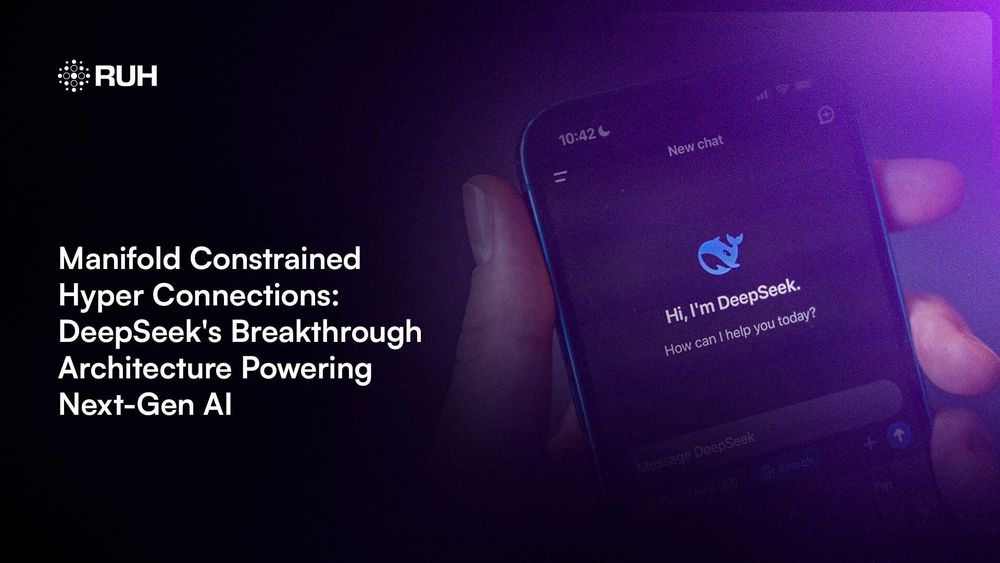
Manifold Constrained Hyper Connections: DeepSeek's Breakthrough Architecture Powering Next-Gen AI
DeepSeek’s manifold constrained hyper connections (mHC) uses the Birkhoff polytope & Sinkhorn-Knopp algorithm to stabilize multi-stream residual networks, preventing training failures and delivering up to 7.2% better reasoning with only 6.
Voice AI Latency Optimization: How to Achieve Sub-Second Agent Responses in 2026
Optimize voice AI latency from speech detection to audio synthesis. Use model quantization, speculative decoding, prompt caching & edge computing to cut delays 29%+ for human‑like, sub‑second agent responses.
Small Language Models (SLMs): The Efficient Future of AI in 2026
Small Language Models (SLMs) are efficient, cost-effective AI systems designed for speed, privacy, and domain-specific accuracy. They enable real-time, on-device AI with lower costs and energy use, making enterprise AI adoption practical and scalable.
AI Agent Protocols 2026: The Complete Guide to Standardizing AI Communication
AI agent protocols like MCP, A2A, and ACP standardize how AI agents communicate with tools and each other, reducing integration complexity, preventing vendor lock-in, and enabling scalable, secure multi-agent systems for enterprises.
AI Employees Are On: The List of Work You Should Stop Doing
AI employees can automate 30–50% of knowledge work by 2026. Humans should stop doing repetitive, rules-based tasks like data entry, status updates, and low-complexity support—freeing time for judgment, creativity, and leadership.
Chatting Is the “Worst” Way To Use AI In 2026
Chat-based AI only boosts productivity marginally because humans still execute work. Agentic AI removes humans from execution entirely, delivering autonomous workflows, compounding efficiency gains, and real operating-model transformation beyond prompting.
Beyond OpenAI's One-Week Rush: The Enterprise Framework for Safe, Fast AI Deployment
Rushing AI deployment like OpenAI’s one-week testing creates costly failures. This guide presents a 12-week enterprise framework that balances speed and safety through structured phases, compliance, governance, and validation to deliver secure AI with real ROI.
How to Build AI Agents That Work While You Sleep: From ChatGPT Chaos to 24/7 Controlled Automation
Many teams use ChatGPT manually, creating extra work instead of automation. Autonomous AI agents run 24/7 with memory, decision-making, and integrations to automate workflows, cut response times, boost ROI, and scale operations effortlessly while you sleep.
OpenAI's Internal Crisis and GPT-5.2's Emergency Launch: Navigating the AI Disruption
OpenAI’s internal turmoil and GPT-5.2’s rushed launch reveal the clash between AI safety and market pressure.
Most Demanded Job Roles in Tech with Advancement in AI
AI is reshaping careers by automating tasks, augmenting human skills, and creating new roles like ML engineers, prompt engineers, and AI ethics leads. Demand for AI talent is soaring, driving human-AI collaboration and new job growth across industries.
The "White-Collar Bloodbath": Why AI is Erasing the Bottom Rung for New Graduates
AI is wiping out entry-level white-collar jobs as automation replaces tasks once done by new graduates. A 13% hiring drop in AI-exposed roles has created an experience paradox, forcing workers to adapt with AI-resistant skills and specialization.
AI Agent Debate Systems: How Multi-Agent Collaboration Improves Decision Making
AI agent debate systems improve decision-making by enabling multiple specialized agents to critique, refine, and validate each other’s reasoning. This collaborative approach boosts accuracy, reduces errors, and delivers smarter outcomes for complex, high-stakes business decisions.
Prompt Chains vs Agent Workflows: Strategic Guide for Enterprise AI Orchestration in 2026
Enterprises in 2025 must choose between cost-efficient, predictable prompt chains and flexible, autonomous agent workflows. This guide explains when to use each, how to combine them, and how to govern AI orchestration at scale.
AI-Powered SEO: How Machine Learning Optimizes Search Rankings
AI-powered SEO shifts rankings from keywords to intent using ML systems like RankBrain, BERT, and MUM. Learn how semantic search, AI Overviews, GEO, and human-led E-E-A-T strategies help future-proof organic growth.
Customer Journey Mapping with AI: Awareness to Advocacy in Real-Time
AI-powered customer journey mapping transforms static funnels into real-time, adaptive experiences optimizing awareness, consideration, decision, and advocacy through predictive insights, personalization, and AI-driven orchestration to drive growth, retention, and revenue.
Marketing Operations Excellence: How AI Eliminates Campaign Bottlenecks
Marketing ops slow campaigns through hidden bottlenecks like delays, misalignment, and overload. AI fixes workflows upstream by detecting friction, automating microtasks, accelerating approvals, and enabling faster, revenue-driven launches.
Marketing Qualified Leads (MQLs) Are Broken: How AI Redefines Lead Scoring
Traditional MQLs fail because static scoring relies on noisy proxies, not buyer intent. AI replaces points with predictive, real-time scoring and AI SDRs that act instantly to convert intent into revenue.
AI- Powered Account-Based Marketing (ABM) : 2026 Ultimate Guide
AI-powered ABM in 2026 replaces shallow personalization with intent-driven relevance. By combining predictive intelligence, hyper-personalized content, and orchestration, B2B teams win fewer accounts with higher deal size, speed, and revenue.
Function Calling in AI Agents: How Claude, GPT-4, and Gemini Execute Tasks
Function calling turns LLMs into real-world agents by enabling secure API actions instead of hallucinations. This guide compares how Claude, GPT-4, and Gemini execute tasks, their trade-offs, costs, and best practices for production-ready AI automation.
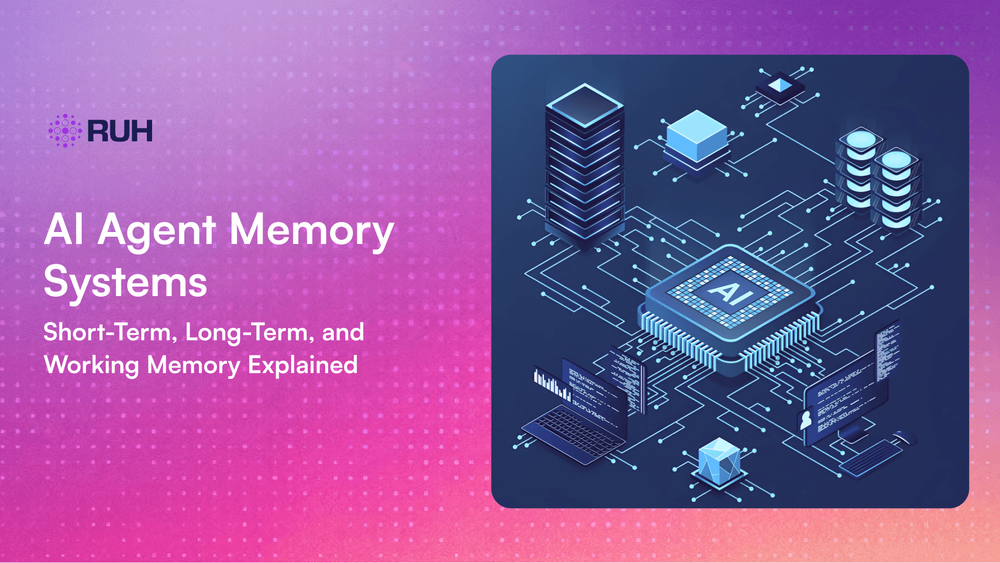
AI Agent Memory Systems: Short-Term, Long-Term, and Working Memory Explained
AI agent memory enables context, learning, and reasoning through short-term, long-term, and working memory. Together, these systems transform AI from stateless responders into adaptive, intelligent agents that personalize, plan, and improve over time.
Stateful vs Stateless AI Agents: Architecture Patterns That Matter
Stateful vs stateless AI agents define how systems handle memory and context. This guide explains both architectures, their trade-offs, use cases, costs, and hybrid patterns to help teams choose the right approach for scalable, intelligent AI systems.
Retrieval-Augmented Generation (RAG) for AI Agents: Complete Guide
Retrieval-Augmented Generation (RAG) connects AI agents to real-time business data, reducing hallucinations and improving accuracy. This guide explains how RAG works, its benefits, use cases, and how to implement it effectively.
Agent Handoffs and Swarm Intelligence: Building Collaborative AI Systems
Agent handoffs and swarm intelligence enable collaborative AI systems where specialized agents coordinate tasks, outperforming single agents with faster execution, higher accuracy, resilience, and scalability and powering next-gen customer support, research, and enterprise automation.
Memory-Augmented AI Agents: How Persistent Context Changes Everything
Memory-augmented AI agents use persistent context and RAG to remember past interactions, enabling true personalization, multi-session continuity, and learning without retraining and transforming AI from stateless tools into intelligent, long-term collaborators.
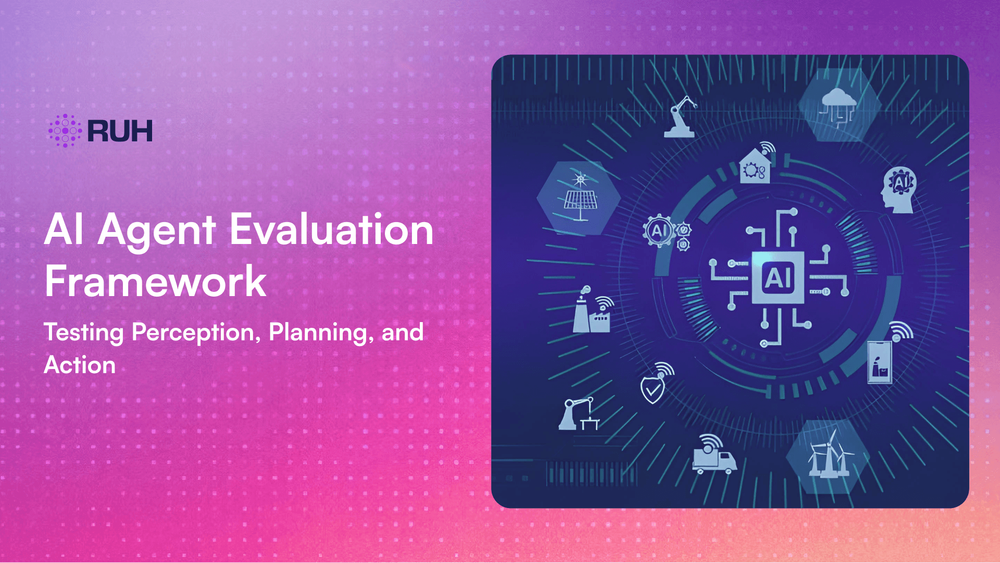
AI Agent Evaluation Framework: Testing Perception, Planning, and Action
A practical framework to evaluate AI agents beyond traditional testing covering perception, planning, and action. Learn key metrics, tools, best practices, and a 4-week roadmap to ship reliable, safe, and production-ready AI agents.
Chain of Thought Prompting: How AI Agents Plan Complex Workflows
Chain of Thought (CoT) prompting enables AI agents to solve complex tasks through step-by-step reasoning. By breaking workflows into logical steps, it improves transparency, accuracy, and trust across business use cases like support, finance, and healthcare.
What is ReAct in AI Agents? Understanding Planning + Action Framework
ReAct (Reasoning + Acting) is an AI agent framework that combines step-by-step reasoning with real-world actions like search and API calls. By verifying information before responding, it reduces hallucinations and enables reliable, transparent AI for complex business tasks.
How Self-Improving AI Agents Learn from Human Feedback: The Complete RLHF Guide
Self-improving AI agents use RLHF to learn human preferences through feedback, not rules. By combining reward models, reinforcement learning, and agentic behavior, they continuously improve decisions, safety, and business outcomes.
Beyond the Benchmarks: Why GPT-5.2 Alone Won't Solve Your Business Problems
GPT-5.2 delivers impressive benchmarks, but real business value comes from data, architecture, governance, and change management.
AI Lead Scoring for SaaS: Your Complete Guide to Smarter Sales in 2025
AI lead scoring helps SaaS teams rank leads by conversion likelihood using machine learning. This guide explains how it works, key benefits, implementation steps, pitfalls to avoid, KPIs to track, and future AI-driven sales trends.
Google IDX: Complete Guide to the Cloud-Based Development Environment
Google IDX, now Firebase Studio, is a browser-based, AI-powered cloud IDE by Google. It offers zero-setup development, Gemini AI assistance, real-time collaboration, and seamless Firebase/Cloud integration for modern full-stack apps.
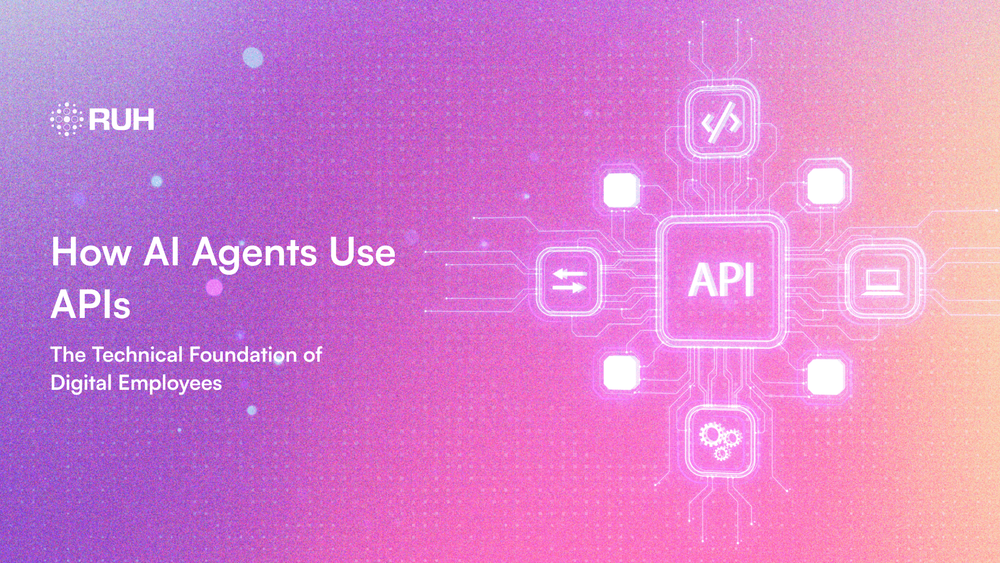
How AI Agents Use APIs: The Technical Foundation of Digital Employees
AI agents act as digital employees by using APIs to access data, execute actions, and automate workflows. This guide explains how REST and AI APIs power agents, plus security, cost, and implementation best practices.
Best AI Sales Agents for Business in 2026: Your Complete Guide to Smart Customer Service
A complete 2025 guide to the best AI sales agents and chatbots for business, comparing top tools, pricing, use cases, trends, and how to choose the right AI for smarter customer service and sales.
The SEO Apocalypse: Why Traditional Search Optimization Is Dying
Traditional SEO is collapsing as AI-driven search fuels zero-click results. Winning in 2025 requires a shift to GEO - earning AI citations through real expertise, authority, and multi-platform presence, not keyword tricks or raw traffic volume.
Top 10 AI Agent Tools in 2026: Your Complete Guide to Choosing the Right Platform
In-depth guide to the top 10 AI agent tools in 2026, comparing platforms for developers, enterprises, and non-technical teams. Covers testing insights, real-world results, pricing, and how to choose the right AI agent platform.
How AI Employees Put Your Content Marketing on Autopilot
AI employees transform content marketing from manual execution to autonomous systems handling research, writing, distribution, and optimization so teams scale output, reduce burnout, and compound growth on autopilot.
The 4 Ps Meet AI: How Intelligent Systems Transform the Marketing Mix
AI transforms the classic 4 Ps from a static planning tool into a dynamic, intelligent system. It enables predictive products, dynamic pricing, fluid omnichannel placement, and hyper-personalized promotion all optimized in real time for a living marketing mix.
Marketing Team Structure in 2027: Where Humans & AI Run Organization
By 2027, marketing teams will be AI-first. Execution is automated by AI, while humans focus on strategy, creativity, ethics, and leadership in pod-based, intelligence-driven org structures.
Traditional Browsers vs Agentic Browsers: The Definitive 2026 Comparison Guide
A definitive 2025 comparison of traditional vs agentic browsers, exploring AI-driven automation, productivity gains, security risks, real-world use cases, and how browsing is shifting from clicks to intelligent collaboration.
What is an Agentic Browser? The Complete Guide to AI-Powered Web Automation
Agentic browsers use AI to autonomously research, compare, book, and complete web tasks from natural language commands. They boost productivity but introduce security risks like prompt injection and data leakage.
Centralized vs. Decentralized Orchestration: Which One Should You Choose?
Centralized orchestration uses a single controller for clear, auditable workflows, while decentralized choreography lets services act independently via events for better scalability and resilience. Most systems succeed with a hybrid approach.
Competitive Multi-Agent Systems: Strategic Reasoning and Adversarial Intelligence
Competitive multi-agent systems study how AI agents compete using game theory, strategic reasoning, and adversarial intelligence. They anticipate rivals, adapt under uncertainty, and power applications in finance, healthcare, supply chains, and cybersecurity.
Cooperative Multi-Agent Systems: The Power of Shared Objectives
Cooperative multi-agent systems align AI agents around shared goals, enabling faster, smarter, and more resilient decisions. By coordinating actions and information, they outperform single-agent systems across finance, healthcare, logistics, and enterprise workflows.

Batch-and-Blast Is Out: AI is Enabling 1:1 Marketing at Scale
AI is replacing outdated batch-and-blast email marketing by enabling true 1:1 personalization at scale. This shift delivers dramatically higher engagement, conversions, and revenue through hyper-relevant, dynamically tailored customer experiences.
Game Theory: The Mathematical Foundation for Strategic AI
Game theory provides the mathematical framework for strategic AI, enabling optimal decisions in multi-agent scenarios. Concepts like Nash equilibrium and minimax power everything from autonomous vehicles to AI negotiations, ensuring robust and cooperative systems.
What is Intelligent Automation? A Complete Guide for Beginners
Intelligent automation combines AI with automation tools to handle complex, judgment-based tasks, boosting efficiency, reducing errors, and freeing employees for higher-value work while helping organizations scale smarter.
The 5 Types of Multi-Agent Architectures for Sales Teams: Boost Revenue by 40% with AI Automation
Multi-agent AI systems deploy specialized digital teams to automate sales. The 5 core architectures, hierarchical, sequential, network, human-in-the-loop, and data transformation, boost conversions 40%, slash response times, and save reps 10+ hours weekly.
Chatbots vs AI Marketing Employees In Conversational Marketing
AI marketing employees are replacing chatbots in conversational marketing, offering hyper-personalization, higher conversions, and cost savings. Discover the future of AI-driven customer experiences.
What Are Reasoning Agents? The Next Evolution in AI Decision-Making
Reasoning agents represent AI's next leap using logical thinking, multi-step reasoning, and context awareness to make accurate, explainable decisions. Transform business automation, analytics, and workflows with intelligent, autonomous systems.
Agentic AI vs Traditional AI: The 2026 Paradigm Shift Reshaping Enterprise Operations
Agentic AI surpasses traditional AI by enabling autonomous reasoning, planning, and end-to-end workflow execution, helping enterprises boost efficiency, scale operations, and achieve faster, measurable ROI.
Learning Agents in AI: A Complete Guide to How Machines Learn and Adapt
Learning agents in AI learn from experience, adapt to new situations, and power modern systems from recommendations to autonomous vehicles, transforming business through continuous improvement.
5 Sales Tasks You Should Automate In 2026
Free your sales team from busywork. Automate lead capture, follow-ups, scheduling, and reporting to reclaim more selling time and outperform targets.
Goal-Based Agents: Complete Guide to AI That Makes Smart Decisions
Goal-based agents are AI systems that plan actions to achieve specific objectives. They perceive their environment, create plans, adapt to changes, and power applications from robotics to healthcare.
Utility-Based Agents: The Smart AI That Makes Better Decisions
Utility-based agents make smarter decisions by scoring every possible action and choosing the highest-value option. They handle complexity, balance priorities, and optimize outcomes across real-world applications.
Simple Reflex Agents: The Simplest Form of AI Explained (2025 Guide)
A simple reflex agent is a basic AI that reacts instantly using “if-then” rules without memory or learning. It powers devices like thermostats and automatic doors, offering speed and reliability in predictable environments.
How AI is Revolutionizing Customer Support: The Real Numbers Behind AI SDR Success
AI is revolutionizing customer support and sales by automating repetitive tasks. This empowers human teams, leading to faster service, happier customers, and a powerful competitive edge.
Seven Types of AI Agents: Complete Guide
Understanding AI agent types prevents costly implementation mistakes. This guide covers 7 agent types from basic reflex systems to complex multi-agent networks with decision frameworks, real examples, and proven ROI metrics from 50+ deployments.
Model-Based Reflex Agents in AI: Complete Guide 2026
Model-based reflex agents combine real-time sensing with memory to make intelligent, context-aware decisions. They power everyday technologies from self-driving cars to fraud detection and smart homes.
Multi-Agent System Architecture: How AI Agents Work Together to Shorten Your Sales Cycle
Multi-agent AI systems shorten sales cycles by automating research, qualification, outreach, scheduling, and CRM tasks through coordinated specialized agents, boosting speed, conversions, and ROI.
Sales Cycle: The Complete 2026 Guide to Closing More B2B Deals Faster
The 2026 B2B sales environment is more complex than ever, with 74.6% of deals taking over four months to close and nearly half exceeding seven months.
The Role of AI Orchestration in Multi-Agent Systems: Your Complete Guide to Coordinated AI Excellence
AI orchestration coordinates multiple specialized AI agents to work together seamlessly, transforming isolated tools into a unified, intelligent system that drives enterprise efficiency.
Hierarchical Agent Systems: Manager, Specialist, and Worker Agent Patterns
Hierarchical AI agent systems use Manager, Specialist, and Worker agents, mirroring human org structures to tackle complex tasks with greater efficiency and accuracy than single agents.
Competitive vs. Collaborative Multi-Agent Systems: Game Theory for AI
Multi-agent AI systems use game theory to balance cooperation and competition between agents. This strategic coordination enables complex problem-solving for enterprise-scale intelligence.
Multi-Agent Systems vs. Single-Agent AI: Understanding the Difference
Single-agent AI handles simple tasks alone. Multi-agent systems coordinate specialized AI teams for complex workflows, offering greater power at higher cost and complexity.
Understanding Multi-Agent Systems: The Foundation of Distributed Intelligence
Multi-agent systems use autonomous AI agents that collaborate to solve complex problems, enabling 80%+ automation, superior scalability, and 99.9% uptime for enterprises.
Multi-Agent Collaboration: The Smart Way to Build AI Systems in 2026
Multi-agent collaboration uses a team of specialized AI experts instead of one general AI. Businesses achieve 3-5x faster task completion, 90% lower costs, and 40-60% better accuracy.
Sales Cycle vs Sales Process: The Complete 2026 Guide to Closing More Deals
Stop using "sales cycle" and "sales process" interchangeably. The cycle is what the timeline from lead to close.
The Hidden Costs of NOT Adopting AI Employees: A 2026 Analysis
Not adopting AI employees costs businesses 20-30% of revenue in hidden inefficiencies. In 2026, delaying AI implementation means falling catastrophically behind competitors.
Lead Qualification Frameworks for AI: BANT, MEDDIC, and CHAMP in Action
Use BANT, MEDDIC & CHAMP lead qualification frameworks to identify high-value prospects. AI is transforming this process with predictive scoring and automation for 67% higher sales success.
How to Measure Sales Success: 15 Essential Metrics to Track
Track 15 essential sales metrics like conversion rate, customer lifetime value, and sales cycle length to measure performance, identify problems, and drive revenue growth.
Multi-Channel AI SDR Strategies: Email, LinkedIn, Phone, and Beyond
Multi-channel AI SDR strategies using coordinated email, LinkedIn, and phone outreach boost conversions by 300% vs. single-channel.
Building Your Sales Process: A Step-by-Step Framework
A structured 7-step sales process from prospecting to closing increases revenue, shortens cycles, and enables scaling. AI tools like Ruh.
The Power of AI in Sales: How AI is Transforming Revenue Teams in 2026
AI transforms sales in 2025, boosting revenue 13-15% by automating tasks, personalizing outreach, and providing predictive insights. Essential for competitive advantage.

The 7 Stages of Sales Cycle: Complete Guide for 2026
Master the 7 sales cycle stages to shorten deal times & boost revenue. This guide covers prospecting to closing, with metrics and AI strategies for 2025.
AI Employees in Financial Services: Navigating Compliance While Accelerating Operations
AI employees boost financial productivity by 20%+ while strengthening compliance. They handle tasks from fraud detection to customer service, transforming operations in this regulated industry.
The Hybrid Workforce Model: Optimal Patterns for Human-AI Collaboration in 2026
Hybrid workforces integrate humans and AI as collaborative teammates. This model boosts productivity, enables 24/7 operations, and lets humans focus on strategy and empathy, unlocking trillions in value.
Multi-Agent Orchestration: How AI Employees Collaborate to Execute Complex Business Workflow
Multi-agent orchestration coordinates specialized AI "employees" to execute complex workflows, delivering 40-60% efficiency gains and faster processing for enterprise automation.
AI Orchestration Platforms: The Strategic Imperative for Enterprise-Scale Intelligence in 2026
AI orchestration platforms are essential for enterprises to scale AI beyond siloed pilots, coordinating models & workflows for major cost savings, efficiency, and competitive advantage.
AI Employee ROI: 12 Metrics That Prove Business Impact Beyond Cost Savings
AI employees boost ROI beyond cost savings. They amplify human teams, accelerating decisions, boosting revenue per employee, and increasing job satisfaction for exponential growth.
State of AI In 2026: Should You Be Worried?
By 2026, AI is essential for business survival. Companies using AI will outperform and out-innovate those that don't, creating a massive competitive divide.
The AI Employee Deployment Blueprint: 90-Day Implementation Framework for Enterprise Success
90-day framework to deploy AI Employees that amplify human talent, driving dramatic productivity gains and revenue growth through strategic human-AI collaboration.
AI Orchestration: The Complete Guide to Coordinating Intelligent Systems
AI orchestration coordinates multiple AI systems to work together efficiently, boosting ROI and decision-making while managing complexity.
AI Employees Are Taking Over: Should You Be Worried?
AI is reshaping work. Those who learn AI get a 56% wage premium and 40% productivity boost.
AI Employees in Healthcare: Augmenting Human Excellence, Not Replacing It
AI in healthcare augments human expertise by automating routine tasks, freeing professionals for complex, empathetic patient care.
AI in MLOps: The Intelligence Revolution Transforming Machine Learning Operations
AI transforms MLOps from manual management to intelligent, self-optimizing systems that automate and orchestrate the entire ML lifecycle for scale.

Cold Email in 2026: Is It Still Worth It?
Cold email thrives in 2026 with AI-powered personalization at scale, making targeted outreach more effective than generic blasts.
Stop Losing Deals: How AI Sales Assistants Fix B2B E-Commerce Outreach at Scale
AI Sales Assistants like Ruh AI automate prospecting, personalization, and early outreach so sales teams focus on closing deals. They boost productivity, improve lead quality, and scale B2B e-commerce outreach through human-AI collaboration.
AI Agent Orchestration: Transform Your Business Workflows
AI agent orchestration coordinates specialized AI agents to automate complex end-to-end business workflows, boosting efficiency, cutting costs, and enabling seamless scaling beyond traditional automation.
AI SDR 101: The Complete Guide to Understanding Sales Development Representatives and AI Solutions
AI SDRs automate prospecting & outreach, freeing human SDRs from repetitive tasks to focus on building relationships and closing deals. The future is AI + humans.
The Shift from Traditional Automation to AI Orchestration: Inside the Rise of Agentic Systems
AI orchestration conducts entire AI systems, MLOps manages model lifecycles, and automation handles single tasks. Discover how they differ and work together, especially with AI agents.
Beyond Single Models: Why AI Orchestration is the Essential Layer for Enterprise Intelligence
AI orchestration integrates multiple AI systems to transform isolated projects into scalable, intelligent solutions, solving the core issue behind the high failure rate of enterprise AI initiatives.
Why Brands Are Using AI for Sales Personalization at Scale
Discover how AI is revolutionizing sales personalization turning generic outreach into intelligent, data-driven conversations that boost engagement, conversions, and revenue at scale.
Top 10 Reasons You Need an AI SDR in 2025
Discover why AI SDRs are transforming B2B sales in 2025. From 24/7 lead coverage and lightning-fast responses to lower costs, scalable personalization, and predictive forecasting, see the 10 reasons your sales team can’t afford to wait.

How One AI SDR Can Transform Your Entire Sales Operations
An AI SDR automates the entire sales development workflow prospecting, personalized outreach, follow-ups, and CRM updates to create a consistent, scalable pipeline. This boosts conversions and frees your human team to focus on closing deals.
Human SDR vs AI SDR: Who's Better To Hire In 2025?
A hybrid approach wins. AI SDRs handle volume, speed, and cost-efficiency for outreach.
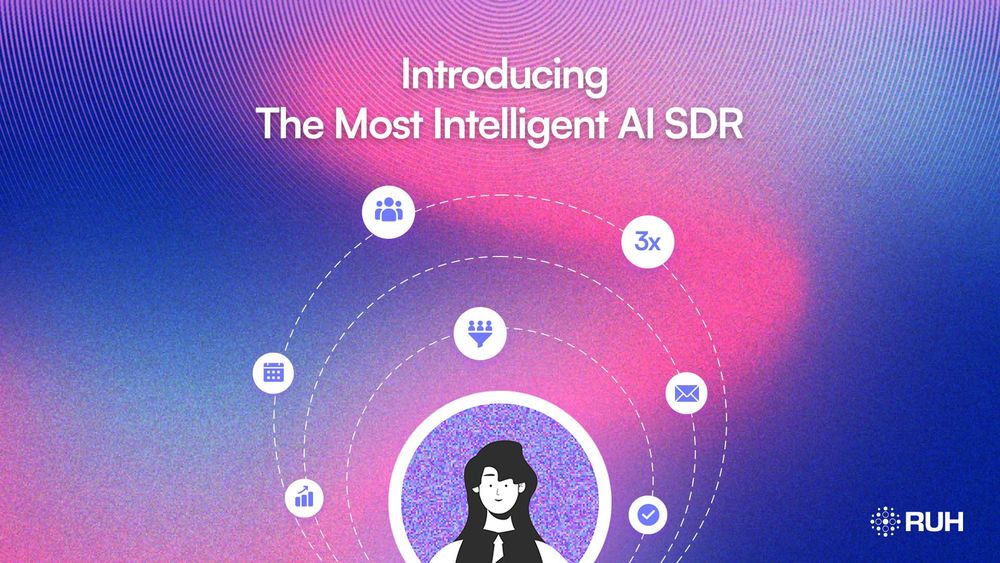
Your First Digital Employee is Here: How the AI SDR is Redefining Sales
Ruh's AI SDR is your 24/7 digital employee. It cuts outreach costs by 80%, books 2-4x more meetings, and delivers 2000%+ ROI by handling research, personalization, and multi-channel campaigns autonomously.
The AI Employee Revolution: Beyond Chatbots and Automation
The AI employee revolution signifies a paradigm shift from task automation to function transformation. These autonomous digital workers, distinct from AI agents, own entire workflows, driving unprecedented efficiency and innovation across industries.
Why Every Company Will Have AI Employees by 2027
By 2027, AI employees will be a fundamental part of every business, no longer an option but a competitive requirement. This shift is driven by legal mandates, vast infrastructure investments, a widening skills gap, and the demand for increased efficiency.
7 Ways AI Employees Eliminate Top Business Problems
AI employees are a competitive necessity, solving business problems by boosting productivity, cutting costs, and reducing errors. They predict and prevent issues, enhance the customer experience, streamline HR processes, and enable smarter decision-making, allowing human teams to focus on high-value, creative work
AI Employees Are Replacing People. What Will Humans Do Now?
AI is transforming the workforce, replacing repetitive tasks and creating new roles. Humans will focus on creative, empathetic, and strategic work, collaborating with AI to achieve new levels of productivity.
AI Employees 101: What Leaders Should Know in 2025
AI employees are redefining work in 2025 - scaling teams instantly, automating busywork, and boosting productivity so humans can focus on strategy, creativity, and growth.
Ruh AI: The Digital Workforce Platform Bringing AI Employees
Discover how Ruh AI is redefining work with AI employees digital workers that scale instantly, collaborate seamlessly, and deliver results without limits. Learn why the future of teams starts here.